
An Archived Program · Preserved At Myrimaven Publishing
MedULingo
A Time Capsule.
MedULingo was a four year applied medical literacy development program (2022-2026). It advanced a patient-centric, learner-centered, medical literacy pathway and lifelong learning approach across developmental stages, from kindergarten to graduate school.
Program
Applied Media Literacy
Operated
2022 - 2026
Writing
80+ Articles
What Is MedULingo?
MedULingo developed Applied Medical Literacy resources such as classroom activity books, storybooks, educator handbooks, course designs, blog articles and free practitioner tools designed to be used by teachers, clinicians, and families.
MedULingo's catalogue, writing, and learning assets were consolidated here to preserve the essence and impact of this work.

Four Years Of Impact, At A Glance.
23,000
Page Views
12,000 unique visitors in four years
4
Canadian Institutions
Engaged through work-integrated learning
10+
Registered Copyrights
In Canada and the United States
Small Evidence Points to Big Impact.
The clearest evidence of MedULingo's effect lives in what parents and educators reported back.
Early learners can use medical vocabulary, and that matters more than it might first appear: medical language so often feels inaccessible that simply speaking it with confidence is itself an act of inclusion. Medical literacy resources can shorten the distance between curiosity and competence.
When children begin engaging voluntarily with medical literacy resources, the impact extends beyond vocabulary acquisition into confidence-building.
Most In-Demand Free Assets.
Download the most popular free resources here.
50 Strength-Word Coloring Sheets
Word Sheets | PDF
118 Chemical Element Word Sheets
Word Sheets | PDF
MedULingo Catalogue
Category 1: Physical Exam Workbook
Physical Exam & the Physical Environment was reviewed by STEM.org!
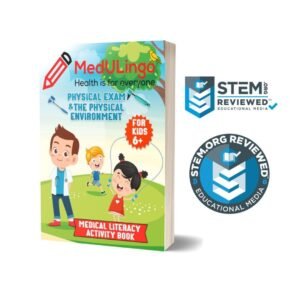
Physical Exam & the Physical Environment
This first prototype physical exam book for youth explored the medical approach to examining the physical body. The book contained examples, analogies, and artistic or creative representations to depict concepts in ways that are easy to understand. This workbook was reviewed by STEM.org.
Category 2: A-to-Z Medical Series
This flagship classroom-ready series encourages differential diagnosis and clinical reasoning from Kindergarten to Grade 3.
An introduction to many diverse causes of rashes, a must-have in any medical literacy curriculum for improving medical knowledge and health outcomes.
An introduction to a wide variety of allergies, a must-have in any medical literacy curriculum for improving medical knowledge and health outcomes.
An introduction to the names, functions, and locations of body parts, foundational anatomy knowledge for understanding the human body.
An introduction to words related to surgery, an important intervention for examining and solving health problems which affect patients.
An introduction to the medical history, an important approach for gathering the information needed to deal with a medical problem and find a solution.
An introduction to histology, a field which allows differences or changes in cells or tissues to be seen using a microscope to understand disease.
Category 3: Storybooks For Young Readers
A narrative storybook series features "The Green Soap Girl", the first children's book character with a preservative allergy.
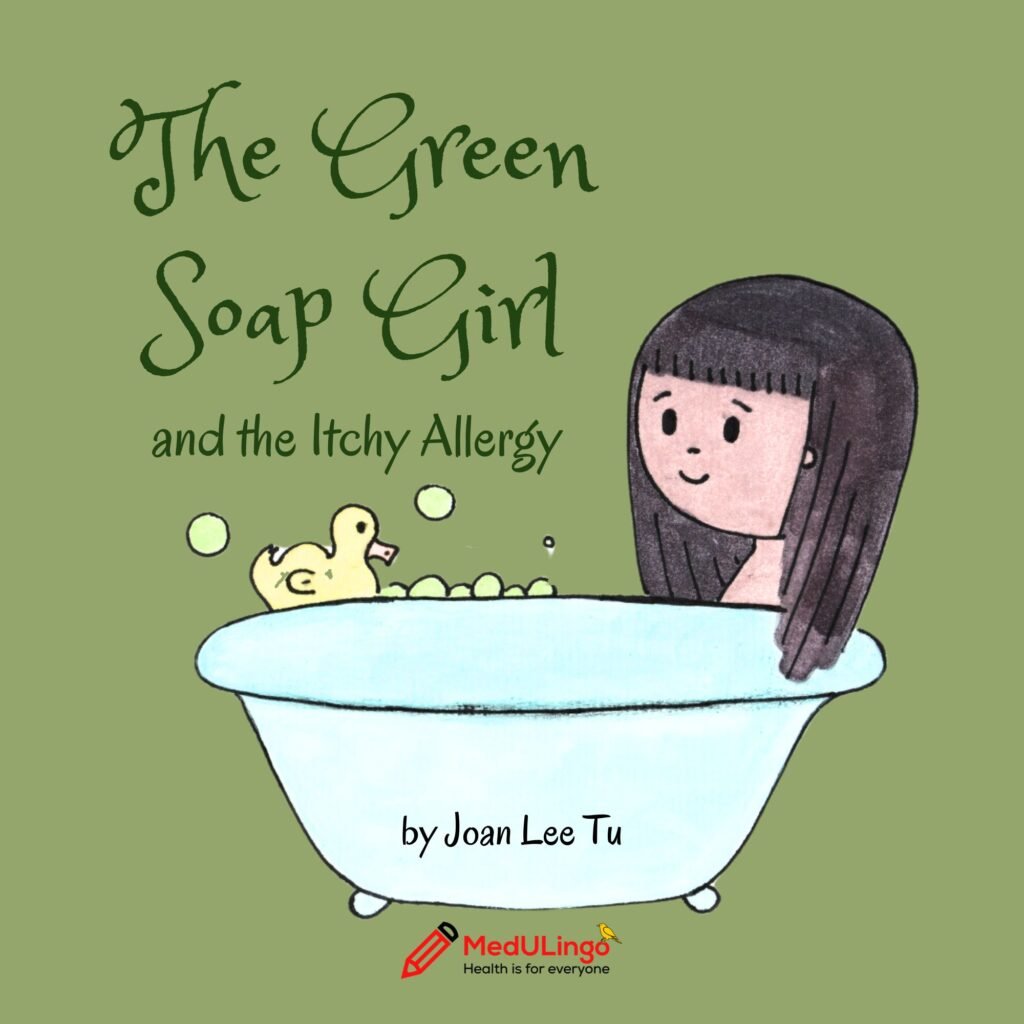
Alice discovers she has methylisothiazolinone allergy and embarks on a green soap adventure. This book is aligned with sustainable development goals and was peer-reviewed by the Green Chemistry Teaching and Learning Community.
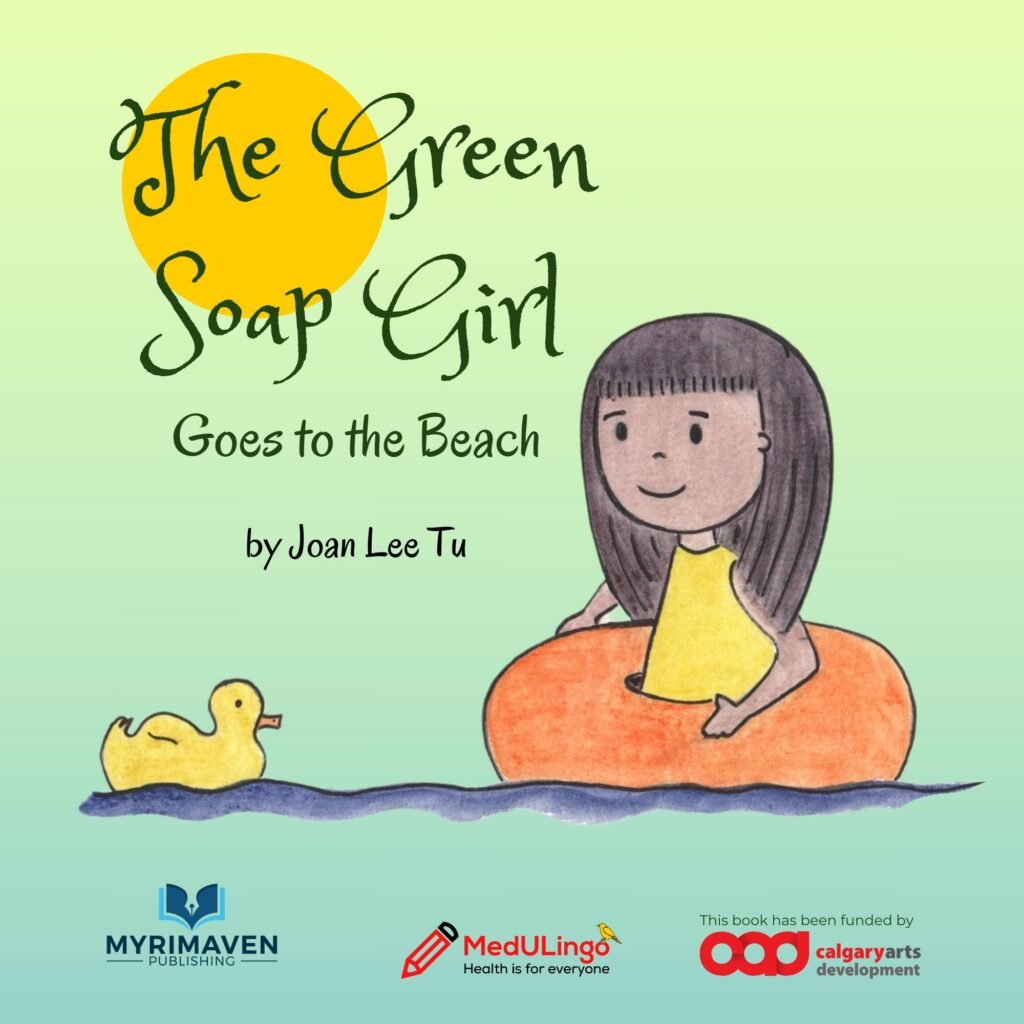
Alice is sensitive to the sun (and possibly sand) at the beach. Exploring themes of disability and inclusion, Alice encounters accessibility challenges on her field trip, but saves the day when it rains. This book was funded by Calgary Arts Development.
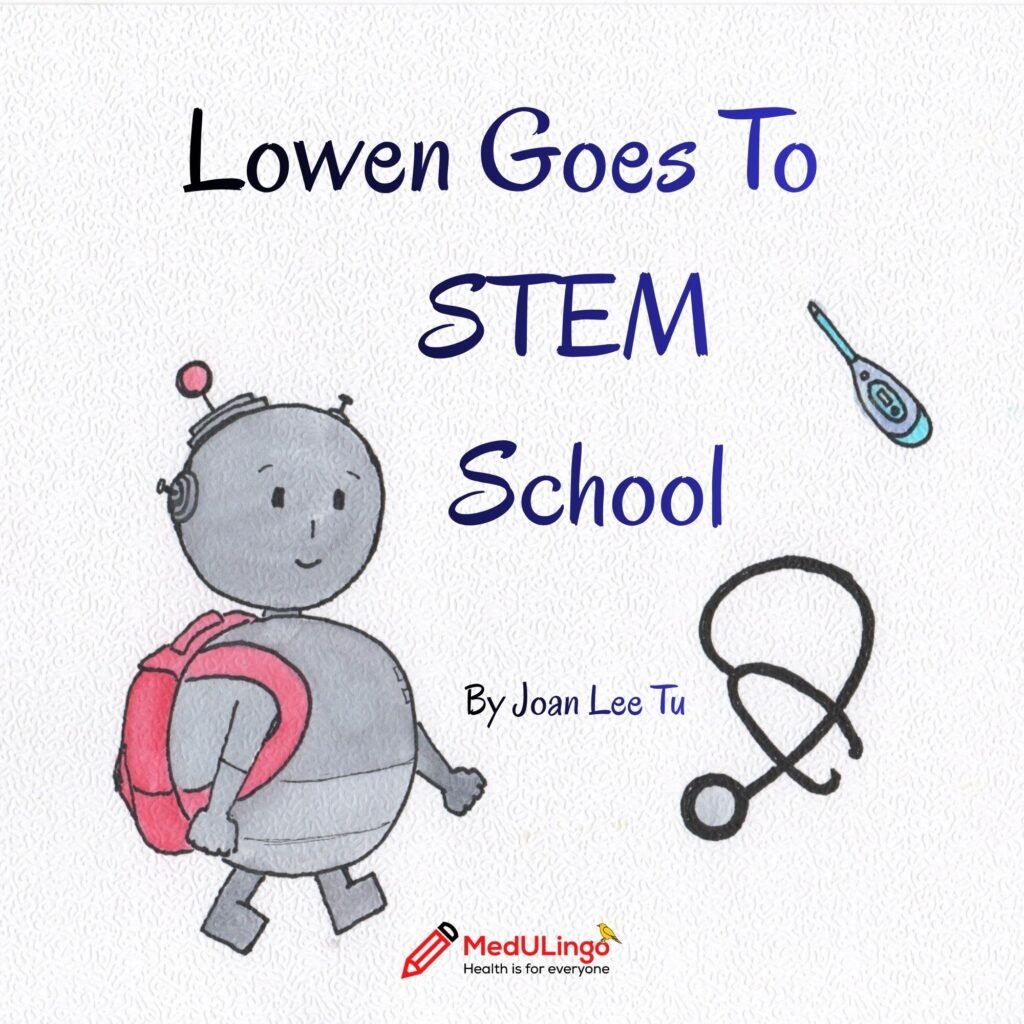
Lowen Goes to Stem School
Meet Lowen, a lovable robot with asthma who embarks on para lel journeys: gaining medical literacy at STEM school and navigating healthcare as a patient.
Category 4: Educator Handbooks
Medical literacy handbooks for teaching children and older adults provide a backbone for curriculum and instruction.
Medical Literacy for Children:
Handbook for Curriculum & Instruction
A flexible pedagogical framework that emphasizes Universal Design for Learning (UDL), and a Guaranteed & Viable Curriculum (GVC) approach.
A flexible andragogical framework that emphasizes Universal Design for Learning (UDL), and a Guaranteed & Viable Curriculum (GVC) approach.
Category 5: Applied Medical Literacy & Sensemaking
Advance chronic disease knowledge with adult and post-secondary education resources.
An activity booklet about contact dermatitis, contact allergens, symptoms, and why allergic contact dermatitis is hard to diagnose, alongside clue-based investigation prompts, and references to cases for deeper learning.
Applied Medical Literacy for Skin Patients
An outline and rationale for a 500-level graduate course designed for adults living with skin conditions to advance dermatological knowledge among patients. It emphasizes constructivism and reflective writing.
Sensemaking with Spreadsheets for Medical & Health Professionals
An outline for a 400-level online course designed for those who want to synthesize and make sense of chronic disease classifications using spreadsheet analysis, AI tools, and reflective writing.
Category 6: Strength-Based Education
Post-secondary educators can use strength/asset-based resources too!
Strength-Based Feedback:
For Writing Assignments
An assessment that guides educators through readings, writing tasks, and reflections to distinguish defict- and strength-based feedback and practice applying asset-oriented language, ideal for educators across all disciplines as a professional development tool.
A workbook that equips medical/clinical educators with practical techniques to reframe negative statements and build a strength-based culture at their institutions. It includes exercises and a list of common deficit-based language examples.
Category 7: Family and Consumer Science
Promote healthy and conscious shopping among families and consumers.
Consumer Literacy Scavenger Hunts
Two printable scavenger hunts that teach students to identify healthy ingredients, organic foods, and healthcare services in real-world settings, designed for field trips or family outings.
Healthy Shopping Game
A printable 2–4 player card game using 52 grocery store item cards, teaches children to identify healthy versus processed foods. The player with the fewest total ingredients in hand when the draw pile runs out wins.
Writings and Reflections
MedULingo's most important blog articles are summarized below.
01
Why Patients Need Medical Literacy for Equity
True equity in medicine requires not just access to care, but access to understanding. As patients become more literate, the healthcare system becomes more transparent, accountable, and genuinely shared.
02
Medicine is for All Minds
Diverse learners need a viable curriculum to protect student mental health because medicine becomes smarter, fairer, and more human when it genuinely welcomes all minds.
03
What is Applied Medical Literacy?
Applied medical literacy goes beyond recognizing terminology to patients critically evaluating sources, using medical information and approaches, co-designing research, and co-creating knowledge.
04
Why a Guaranteed and Viable Curriculum Matters for Medical Literacy
Drawing on Robert Marzano's framework, a guaranteed and viable curriculum is the remedy to medical education's "drink-from-the-firehose" cognitive overload problem.
05
Sensemaking in Medical & Health Education Makes So Much Sense
Embedding sensemaking transforms education into a collaborative community of inquiry where patients, clinicians, researchers, and educators co-create knowledge that is both rigorous and useful.
06
Clinical Reasoning in Grade 3 with A-to-Z Medical History and Histology Lessons
Connecting what a patient shares (history) with what is observed at the cellular level (histology) builds transferable critical thinking skills: gathering evidence, recognizing patterns, asking questions, and understanding illness.
07
Building Differential Diagnoses in Kindergarten with A-to-Z Medical Literacy
The A-to-Z Rashes and Allergies books introduce that a symptom can have many different underlying explanations (similar to the clinical practice of building differential diagnoses using mnemonics like VITAMIN CDE and VASCULITIS).
08
Who Should Be the Hero in a Medical Literacy Book?
The choice of hero directly shapes how accessible and meaningful a story feels to readers and how effectively it inspires them to engage actively with their own health.
Testimonials for MedULingo
★★★★★
“We love the resources by MedULingo. They are interesting and engaging for my young kids who are interested in the human body and medicine. We love that it’s accessible for all ages. Medical literacy is so good to have even if you don’t want to study medicine long term.”
– Home Educator
“MedULingo’s A to Z Medical Literacy workbooks are perfect for young children
curious about the medical field or with connections to healthcare practitioners.
These books on Rashes and Rare Allergies introduce medical concepts and
terminology in a gentle way that is both interactive and educational. I am excited
to see this unique gap addressed within the educational field, and I look forward
to more exceptional Medical Literacy workbooks in the future!”
– Tina Rewkowski, Educator and Allergies Advocate
“Engaging for my 7-year-old son who enjoys learning about the human body. He
was willing to practice writing for this (not his favorite thing to do). He even
thought some of the choices were funny.”
– Rachel C., MEd in Teaching and MSCP
“This book gave me so many ideas on how to improve health literacy in my own
community.”
– Monica, Registered Nurse
“The refugee family we sponsored has a 14-year-old daughter who now really wants to be a doctor. She was very happy to start learning.”
– Dr. Wat, Physician
“This workbook is actually great for us to use as a recap or way to understand the topics we learn about. I want to use this during my shifts brush up my knowledge”
– Erica, Paramedic
“A diagnosis of methylisothiazolinone allergy is difficult for anyone to receive, let alone a child, but The Green Soap Girl is a sweet and supportive kids’ book which will reassure recently diagnosed children that they’re not alone, and that things will definitely get better.”
– Alex Gazzola, author of Living with Methylisothiazolinone Allergy
"The green soap series provides easy to understand education on a medical condition that isn’t well known in a way that is easy to understand for children, their caregivers and their friends while also providing support so kids know they are not alone."
– Amanda Farris, Founder & CEO of Medics Camp
“As someone who is an advocate of advancing health literacy, I was absolutely delighted by The Green Soap Girl and the Itchy Allergy. This book is a beautiful and much-needed resource that takes a complex health topic- understanding allergic reactions and skin sensitivity- and makes it accessible, relatable, and even fun for children and families.
What stands out is how thoughtfully the story blends medical accuracy with empathy. Through the engaging narrative and vibrant illustrations, the story empowers kids to be curious about their health, to ask questions, and to feel seen in their experiences – cornerstones of health literacy practices.
This book is a conversation starter that can be used as a tool for caregivers, educators and health professionals alike. It is a great book to anyone looking to foster early awareness, confidence, and understanding in children around their own health and wellbeing.”
– Tara Chen, Health Literacy Advocate
“Joan Lee Tu’s The Green Soap Girl series is a fun, engaging, and educational set of children’s books that introduces young readers to important medical topics in an accessible way. With clear, colorful illustrations and simple, easy-to-understand language, these books make learning about health conditions both entertaining and informative.
In The Green Soap Girl and the Itchy Allergy, children learn about allergic contact dermatitis and its treatment through a relatable and well-crafted story. Meanwhile, The Green Soap Girl Goes to the Beach explores photosensitivity, helping young readers understand how the sun can affect sensitive skin and how to manage it. The storytelling approach makes these medical topics approachable, reducing fear and increasing awareness in a natural and enjoyable way.
These books are excellent tools for parents, caregivers, and educators looking to introduce health concepts to children. With their engaging narratives and thoughtful illustrations, they strike a perfect balance between fun and education, making them a valuable addition to any child’s library”
– Ahmad Nazzal MD, PhD
“Green Soap Girl Goes to the Beach” is a groundbreaking and beautifully crafted children’s book that brings much-needed awareness to methylisothiazolinone (MI) allergy—an often overlooked but significant issue for many families. Joan not only tells a heartfelt and educational story but also brings it to life with her own charming illustrations, making this book both engaging and informative.
Teaching kids about allergies early on is crucial in helping them understand their own health, develop empathy for others, and recognize that not all children experience the world in the same way. Books like Green Soap Girl foster inclusivity, encourage important conversations, and empower kids to navigate differences with kindness and awareness. This is a must-read for families, educators, and healthcare professionals alike.”
– Soo Jo, CEO of Pokka Kids